Numismatics Catalog
Gold of the Pharaohs: Tutankhamun
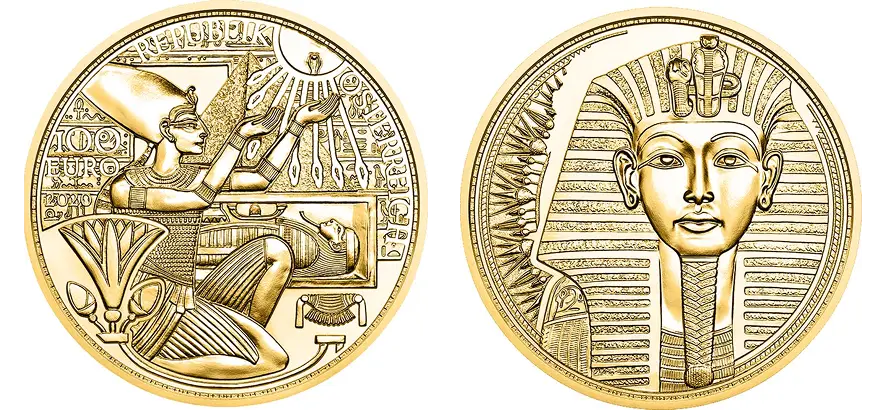
 France
This gold commemorative coin issued by France belongs to the Gold of the Pharaohs series and is dedicated to Tutankhamun, one of the most iconic rulers of Ancient Egypt. The reverse presents a detailed frontal depiction of Tutankhamun wearing the royal nemes headdress with the uraeus cobra, symbolizing divine authority and kingship. The obverse illustrates a richly symbolic Egyptian scene combining hieroglyphs, ritual elements, solar imagery, and stylized figures, evoking the religious and cosmological beliefs of ancient Egypt. Struck in gold, the coin highlights the artistic legacy, spiritual depth, and enduring fascination with pharaonic civilization.
read article Ancient Civilizations & Antiquity5 Dollars Scarab Beetle “Red Dawn” Silver Coin
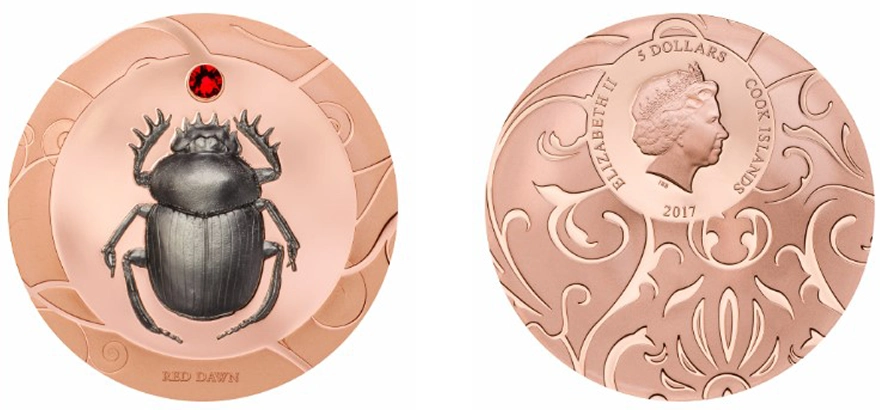
 Cook Islands
This commemorative silver coin issued for the Cook Islands features a scarab beetle, an important symbol in ancient Egyptian culture representing rebirth, renewal, and protection. The scarab is depicted in high relief and enhanced with a dark finish, set against a copper-toned background with a red gemstone insert above the beetle, titled “Red Dawn.” The reverse bears the effigy of Queen Elizabeth II and the denomination of five dollars. The coin combines ancient symbolism with modern minting techniques and decorative elements, making it a distinctive contemporary collectible.
read article Ancient Civilizations & AntiquitySilver Denarius of Marcus Aurelius
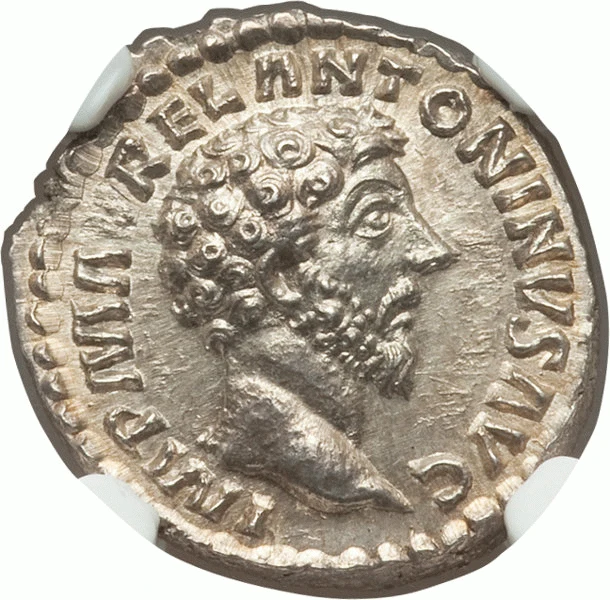
This silver denarius was issued during the reign of Emperor Marcus Aurelius, one of Rome’s most respected philosopher-emperors and a central figure of the Nerva–Antonine dynasty. The obverse features a right-facing portrait of Marcus Aurelius with a curly beard, reflecting the mature imperial style of the late 2nd century AD. Denarii of this period circulated widely across the Roman Empire and are closely associated with an era marked by military campaigns, internal challenges, and the emperor’s Stoic philosophy, later recorded in his work Meditations. Coins of Marcus Aurelius represent the final height of Rome’s so-called “Golden Age.”
read article Ancient Civilizations & AntiquityKing Croesus Gold Stater (Lion and Bull)
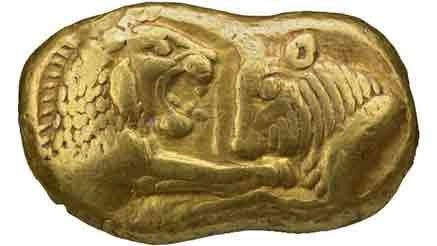
This gold stater was issued during the reign of King Croesus of Lydia, one of the most famous rulers of the ancient world and a symbol of immense wealth. The coin features a confronting lion and bull, a powerful Near Eastern motif representing royal authority, strength, and cosmic balance. Coins of Croesus are historically significant as the first true bimetallic coinage system, struck in separate issues of refined gold and silver rather than electrum. This innovation marked a major milestone in monetary history and laid the foundation for standardized coinage throughout the Greek and Persian worlds.
read article Ancient Civilizations & AntiquityBronze Follis of Constantine I (the Great)
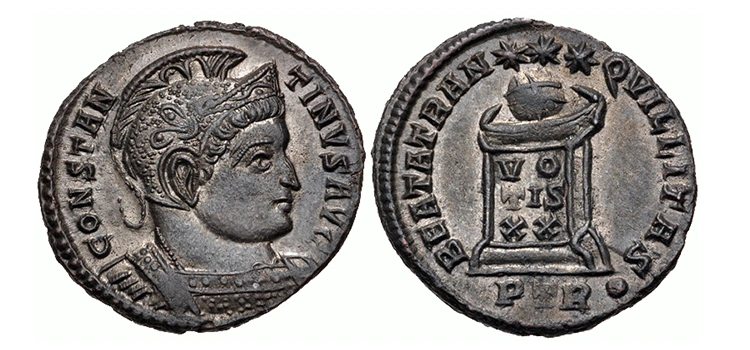
This bronze follis was issued during the reign of Emperor Constantine I, known as Constantine the Great, one of the most influential rulers in Roman history. The obverse shows a bust of Constantine wearing a military helmet and imperial armor, emphasizing his role as commander and restorer of order. The reverse depicts a camp gate with towers and stars above, a common Constantinian motif symbolizing military security, stability, and the defense of the empire. Coins of this type were struck during a transformative period marked by Constantine’s consolidation of power and the rise of Christianity within the Roman state.
read article Ancient Civilizations & AntiquitySilver Denarius of Emperor Commodus
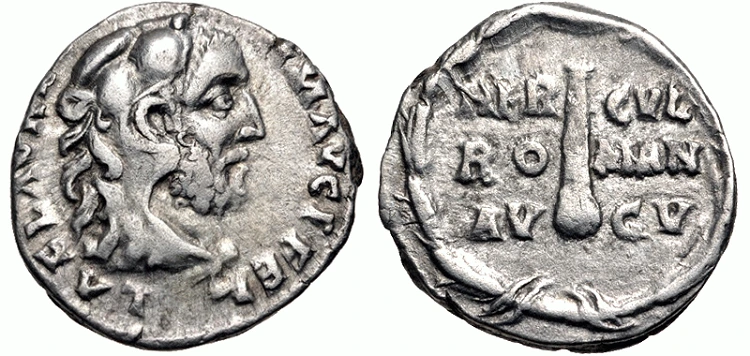
This silver denarius was issued during the reign of Emperor Commodus, son of Marcus Aurelius and the last ruler of the Nerva–Antonine dynasty. The obverse features a laureate portrait of Commodus, reflecting imperial authority and continuity of the Antonine tradition. The reverse bears a Latin inscription arranged in lines, a style common to late 2nd-century Roman coinage, emphasizing imperial titles and legitimacy. Commodus’ reign marked a significant turning point in Roman history, characterized by political instability and a departure from the disciplined governance of his predecessors. Coins of this period are important historical documents illustrating the transition toward the later imperial era.
read article Ancient Civilizations & Antiquity2000 Francs CFA Sumerian Winged Bull (Lamassu) Silver Coin
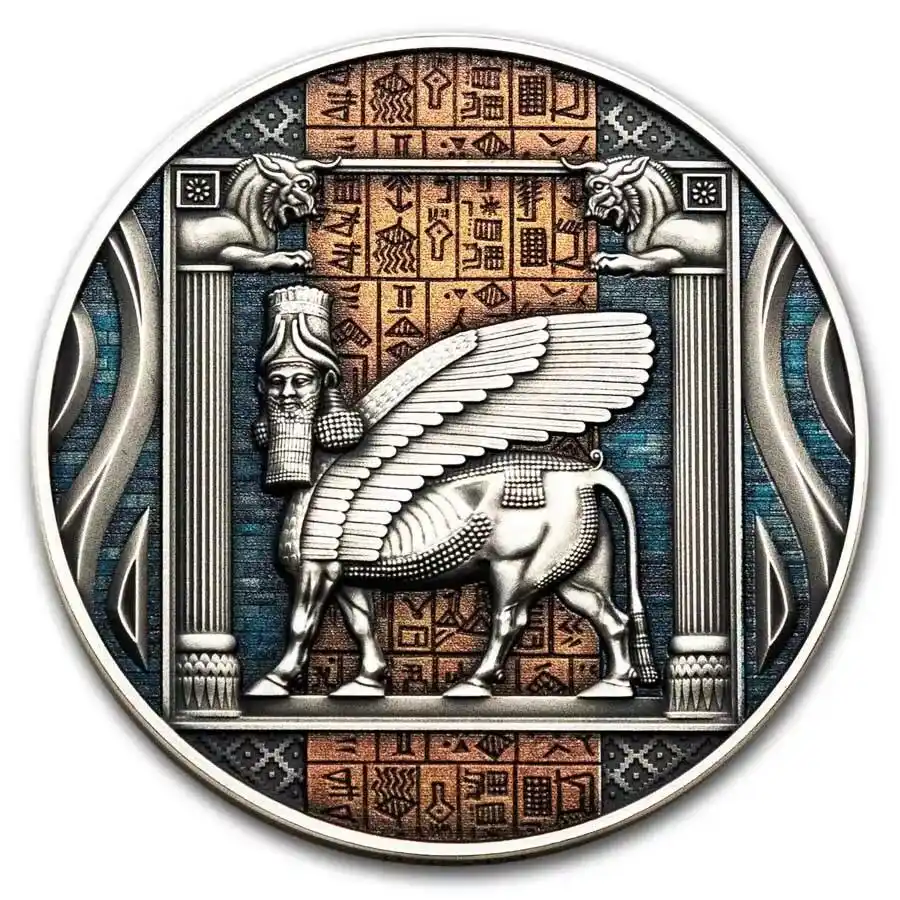
 Republic of Cameroon
This silver coin issued by the Republic of Cameroon features a detailed depiction of the Lamassu, the winged bull from ancient Sumerian and Assyrian mythology. The Lamassu, combining a bull’s body, eagle’s wings, and a human head, symbolized strength, protection, and divine authority and was traditionally placed at the entrances of palaces and temples in Mesopotamia. The design is framed by architectural columns and cuneiform-style inscriptions, referencing early writing systems of ancient Sumer. Struck as a modern collectible issue, the coin highlights humanity’s earliest civilizations and their lasting cultural legacy.
read article Ancient Civilizations & AntiquitySilver Tetradrachm with Elephant
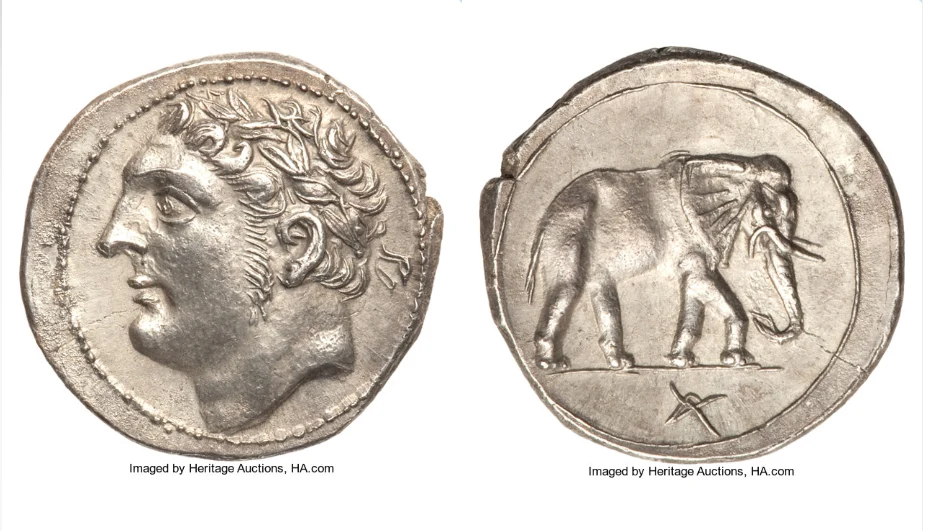
This ancient silver tetradrachm was struck by Carthage in the late 3rd century BC, shortly after the First Punic War. The obverse features a male head in classical style, often identified with Melqart (the principal deity of Carthage) or a Hellenized portrait influenced by Greek coinage. The reverse depicts a war elephant, a powerful symbol of Carthaginian military strength and closely associated with Carthage’s armies, particularly during the era of Hannibal Barca. The elephant imagery reflects Carthage’s use of war elephants in conflicts against Rome and serves as a lasting emblem of Punic identity and power in the ancient Mediterranean world.
read article Ancient Civilizations & AntiquityAthenian Silver Tetradrachm (Owl Type)
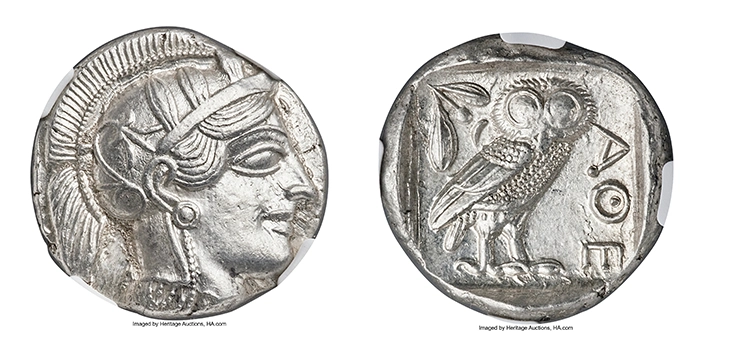
This silver tetradrachm was issued by the city-state of Athens during the Classical period and is one of the most recognizable coins of the ancient world. The obverse features a right-facing head of the goddess Athena wearing a crested helmet, symbolizing wisdom and military protection. The reverse depicts an owl standing beside an olive sprig and crescent moon, accompanied by the Greek inscription “ΑΘΕ” (of the Athenians). Widely used in trade across the Mediterranean, the Athenian tetradrachm reflects the economic power, cultural influence, and artistic identity of Athens at its height.
read article Ancient Civilizations & AntiquityAlexander the Great Silver Tetradrachm
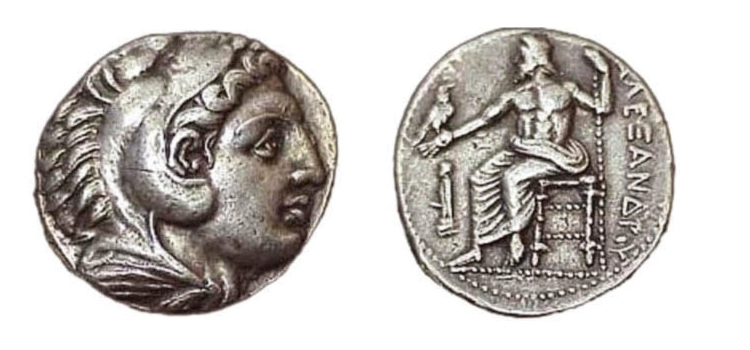
This silver tetradrachm was issued during the reign of Alexander III of Macedon, known as Alexander the Great, or shortly after his death. The obverse features a right-facing portrait of Heracles wearing a lion skin, symbolizing strength and divine ancestry. The reverse depicts Zeus seated on a throne holding an eagle and scepter, with the Greek inscription “ΑΛΕΞΑΝΔΡΟΥ” (of Alexander). These coins were struck across Alexander’s vast empire and became one of the most widely circulated and influential coin types of the ancient world, reflecting both political power and cultural unity.
read article Ancient Civilizations & Antiquity