back
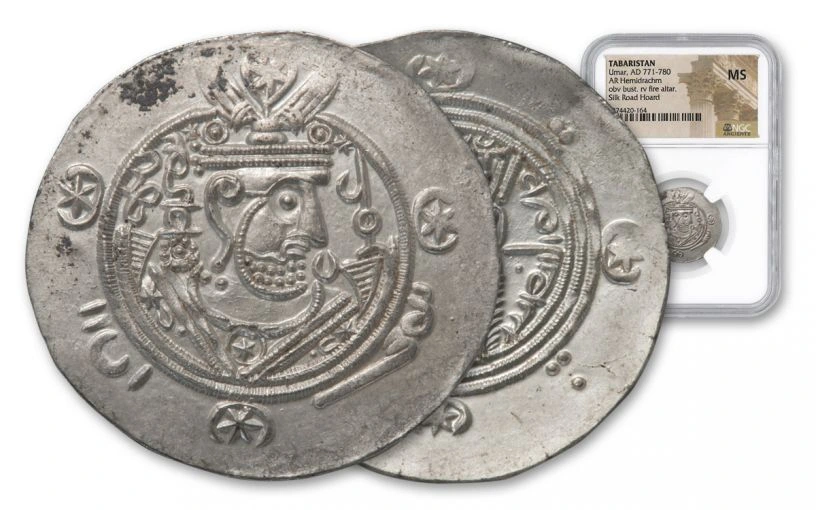
Umayyad Silver Hemidrachm of Umar II
Tabaristan (Umayyad Caliphate, present-day northern Iran)
AD
This silver hemidrachm of Umar ibn Abd al-Aziz represents a rare and historically important phase of early Islamic coinage produced in the Tabaristan region. The coin follows the Sasanian monetary tradition, featuring a stylized bust in royal regalia with elaborate crown and ribbons, reflecting the continuity of pre-Islamic visual language under Islamic rule. Zoroastrian-derived symbols and star-and-crescent motifs remain visible, while Arabic inscriptions identify the Islamic authority. Struck during the Umayyad period, the coin illustrates a transitional moment in monetary history, where Islamic governance adapted established local coin types to ensure economic stability while gradually introducing new religious and political identities.
read article Ancient Civilizations & Antiquity